
Inauguration of Genomics Laboratory at the BKL Walawalkar Rural Medical College & Hospital, Sawarde, District-Ratnagiri
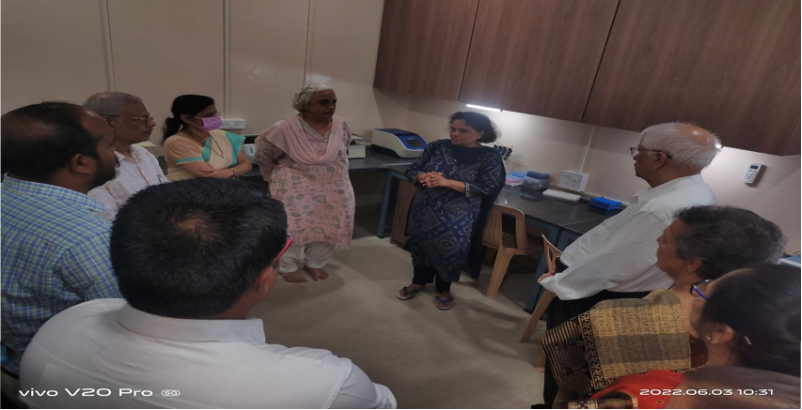
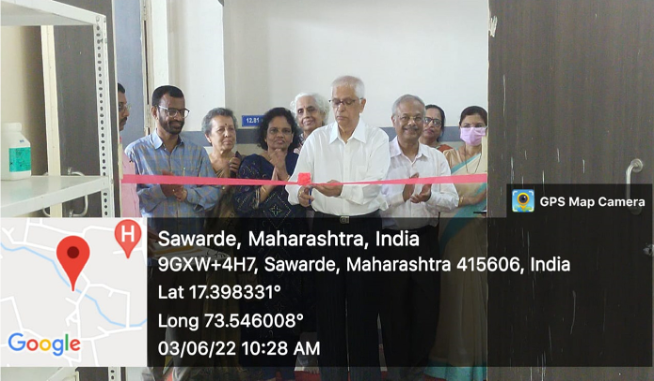
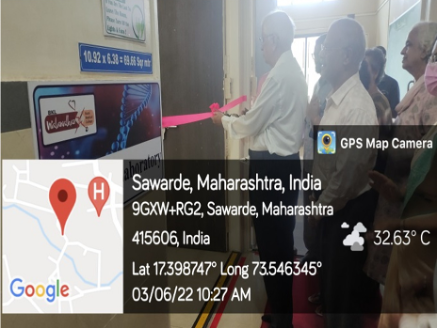
On 3rd June 2022, a Genomics Laboratory was inaugurated by Shri Ashok Joshi Trustee SVJCT in the presence of Shri Vikas Walawalkar (Managing Trustee, SVJCT) at the BKL Walawalkar Rural Medical College. Dr. Rita Mulherkar, Scientist, Dr. Neelam Shirsat, Scientist, Dr. Vijay Dombale, Principal, Dr. Suvarna Patil, Medical Director, and several other dignitaries
from the college and hospital were present at the inauguration.
The genomics laboratory was established with the initiation of genomic studies at the research centre. Dr. Neelam Shirsat and Dr. Shripad Banavali, Tata Memorial Hospital are carrying out a project to develop a blood test for the early detection and monitoring of cancer patients. Cancer if detected at an early stage can be cured without the need for aggressive treatment. The initial emphasis of the study is on breast and ovarian cancer since these are the two most common gynecological cancers in the Kokan region. Breast cancer patients, especially those having hormoneresponsive cancer, often have long-term survival but need monitoring at regular intervals. On the
other hand, ovarian cancer is often detected at late stages due to the absence of symptoms at early stages. Ovarian cancer is very aggressive and refractory to treatment at late stages. Hence, a simple blood test is being developed for the early detection and regular monitoring of cancer patients at the Genomics Laboratory. The test is based on the release of small regulatory RNAs in circulation by cancer cells. In the first discovery phase, genome-wide profiling of the small RNAs will be performed on the blood samples from cancer patients and healthy normal controls. The test will then be developed based on the regulatory RNAs that are significantly different in blood samples of cancer patients compared to healthy controls.
Dr. Suvarna Patil, Medical Director, BKL Walawalkar Hospital is studying the effect of malnutrition on the long-term metabolic health of the adolescent population of Dervan and neighboring rural areas. India is the world capital of diabetes and also has a high incidence of cardiovascular disease. These metabolic diseases are not only prevalent in the urban population but also undernourished rural population. Biochemical analysis of the Dervan cohort shows a high prevalence of vitamin B12 deficiency and high levels of homocysteine in the blood. Homocysteine is an intermediate in the metabolism of dietary methionine. High homocysteine levels could result from dietary deficiencies of vitamins like B12 and B6 but can also have a genetic basis. Therefore, Dr. Patil is studying polymorphisms in the genes involved in homocysteine metabolism. A polymorphism in a gene called MTHFR results in a 60% reduction in the activity of the MTHFR enzyme. This polymorphism, common in the Caucasian population, was found in about 15-20% of the Dervan population as well. Identification of the underlying cause of hyper-homocysteinemia is crucial for developing appropriate strategies to alleviate the problem. Hyperhomocysteinemia could also affect epigenetic modifications that could alter gene expression leading to metabolic syndromes.
Dr. Shirsat thanked Mr. Joshi and Mr. Walawalkar for promoting genomic studies and creating infrastructure for the same. She thanked Dr. Patil, Dr. Mulherkar, and Dr. Nakathe for making available the infrastructure necessary for the genomic studies. The project on cancer is feasible today as the cancer treatment started several years ago by Dr. Banavali at the BKL Walawalkar Hospital. She thanked Dr. Desai for the tumor specimens and Dr. Dombale for the histopathological diagnosis of cancer patients. The genomics laboratory was designed and built in a short time by the efficient staff of the hospital and the initiation of the genomic study was feasible due to the support of the staff of several departments like the Department of Microbiology, Pathology, and Pharmacology at the college. The genomic laboratory is expected to boost research at the genomic level in various areas of medicine at the BKL Walawalkar hospital.